

Protecting Agricultural Property Rights: What Recent Bills Mean for Farmers

Written by Gabriel Flores (Government Relations Intern)
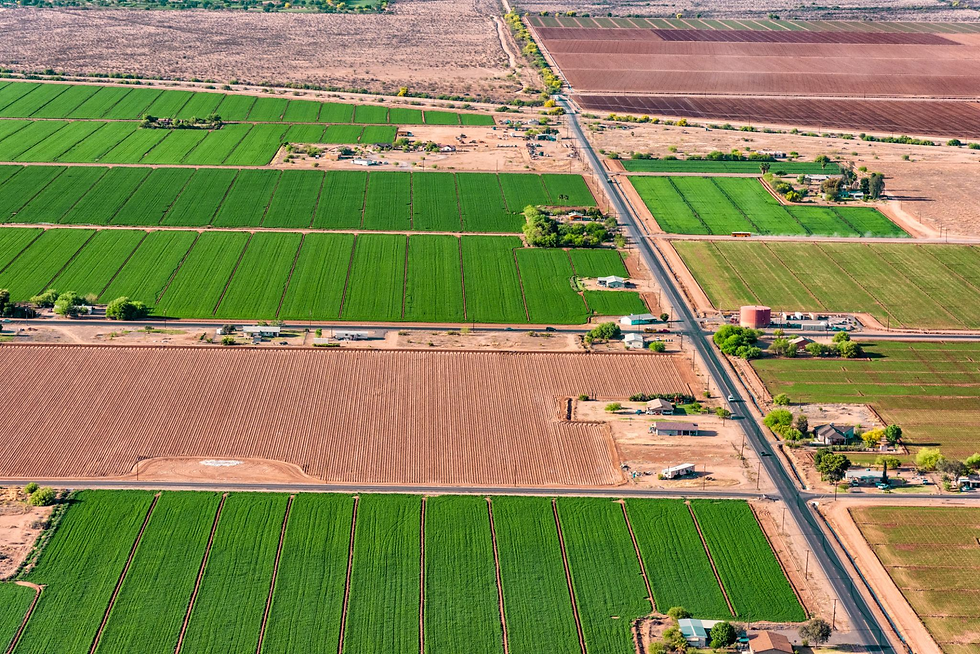
The central foundation of farmers and ranchers extends well beyond equipment, products, and income; it's their land, something seen more as "just" property. Arizona law allows land actively used for farming or ranching to receive an agricultural classification, recognizing the economic realities of agriculture and ensuring land is taxed correctly rather than taxed on potential development value.
This week's topic will be on new classification bills and how they could benefit our farmers. The main issue lies within disputes over inspection and positioning procedures, thus causing costly uncertainties for producers. New bills are being introduced in the current legislative session to improve stability and transparency in land inspections.
Bringing Stability to Agricultural Classification
Two bills in the Arizona Legislature, SB1291 and HB2104, are designed to provide enhanced predictability for agricultural landowners following a successful appeal in a classification dispute.
Both bills will prevent a county assessor from reclassifying the land or performing an on-site inspection for four years following a successful appeal in any sort of categorization conflict
There are exceptions to this rule, including:
If the landowner sends in a notice of change in land use
If the land is in separate parcels
If there is a change in ownership or lease
This is intended to give landowners a period of time in which they can plan following a successful appeal. Farmers and ranchers are long-term investors in land and infrastructure, and this predictability can make a significant difference for these landowners.
Improving Transparency in Agricultural Inspections
Another bill, HB 2105, deals with the inspection process itself by increasing transparency. The bill aims to ensure that county assessors or the Arizona Department of Revenue provide advance notice before conducting any property inspection for valuation purposes.
The bill also aims to ensure that:
The property owner is provided with notice of the inspection date
The property owner is provided with a copy of the inspection report
Additional inspections are limited to once every three years unless ownership or land use changes(See above). All of these changes are aimed at ensuring that agricultural landowners are provided with increased communication in inspection processes.
Why These Changes Matter for Arizona Agriculture
Although these proposals focus on administrative procedures, they can have meaningful impacts on agricultural operations.
Property classification directly affects how agricultural land is valued for tax purposes. Unexpected changes or repeated inspections can create uncertainty for producers already managing complex operations.
In places like Maricopa County, where agriculture exists alongside rapid urban growth, maintaining clear and predictable classification standards is particularly important. Stable policies help ensure working farms and ranches can continue operating while meeting regulatory requirements.
The Bigger Picture
At their core, the bills seek to increase predictability, transparency, and equity in the way agricultural property is classified and inspected.
Agricultural landowners want a clear and consistent process so they can focus less time worrying about administrative uncertainty and more time doing what they do best—producing food and managing the land.
References
Arizona State Legislature. SB1291 – Agricultural Property; Classification; Inspection
Arizona State Legislature. HB2104 – Agricultural Property; Classification; Inspection
Arizona State Legislature. HB2105 – Agricultural Property; Inspections; Notice


Comments